Thursday, May 23, 2013
A Little Fox Farms Organic Big Bloom for the Pumpkin Plants
Today I gave the pumpkin plants some foliar and drench Big Bloom with their water. It is a very mild organic fertilizer. Less than 1% of NPK. The plants are growing, although not terribly fast and I'm not sure why. I'm not overly concerned about it at this point, but I would have expected the vines to be down by now, but they are not. Both plants however have very thick stumps so that often keeps the vines up in the air longer.
Labels:
Fertilizers,
pumpkin fertilizer
Sunday, May 19, 2013
Latest Pictures from the Pumpkin Patch
This evening I gave both of my plants some fish & seaweed along with an extra helping of water. Growth seemed a little slow lately so I wanted to see if this would push the plants along some. This is the first nitrogen I've given the plants. I like the look of my son's 335 Scherber plant. It has really come along in the last week.
| 1421 Stelts |
| 1775 Starr |
| 335 Scherber |
| 1799 Daletas |
Saturday, May 18, 2013
Kids Pumpkin Plants are in the Ground and Benefical Nematodes
Finally got my son and daughter's pumpkin plants in the ground this evening. They should have been planted a week ago but my schedule hasn't allowed me time to help them do it. My son is growing a 335 Scherber (1421 Stelts x 1161 Rodonis). Both mom and pop were clone plants in the 335 cross so the 1421 grow a 1663 pound pumpkin and the 1161 grew a 1725 pound pumpkin that tied the world record for a day until a larger pumpkin went to the scale shortly after. I like the cross and would like to pollinate it with a clone of the world record 2009 pumpkin.
My daughter planted a 1799 Daletas (1495 Stelts x 1409 Miller). I saw the pumpkin and spoke to Steve Daletas about it last fall and knew my daughter would love the orange color of the mother. It is a beautiful plant. Dark green color and big leaves. If it has a flaw it is the leaves droop badly in the sun because they are so big. I'm hoping it is hardened off enough to take some sun over the next week. Cooler days ahead which will help.
Today I sprayed the whole pumpkin patch with beneficial nematodes, Biotamax and Azos. The beneficial nematodes seek out insects and insect larva in the soil and kill them. A nice little benefit. Biotamax I've talked about many times before, but it is mostly beneficial bacteria and trichoderma. The Azos is a nitrogen fixing bacteria. The soil has to be warm to get it going and we've had some upper 80 degree days and the soil is plenty warm now. The rye grass should like all of this new biology. It is growing very quickly. I'm going to need to mow it in the next two weeks.
My daughter planted a 1799 Daletas (1495 Stelts x 1409 Miller). I saw the pumpkin and spoke to Steve Daletas about it last fall and knew my daughter would love the orange color of the mother. It is a beautiful plant. Dark green color and big leaves. If it has a flaw it is the leaves droop badly in the sun because they are so big. I'm hoping it is hardened off enough to take some sun over the next week. Cooler days ahead which will help.
Today I sprayed the whole pumpkin patch with beneficial nematodes, Biotamax and Azos. The beneficial nematodes seek out insects and insect larva in the soil and kill them. A nice little benefit. Biotamax I've talked about many times before, but it is mostly beneficial bacteria and trichoderma. The Azos is a nitrogen fixing bacteria. The soil has to be warm to get it going and we've had some upper 80 degree days and the soil is plenty warm now. The rye grass should like all of this new biology. It is growing very quickly. I'm going to need to mow it in the next two weeks.
Wednesday, May 15, 2013
Cover Crop is Coming in Nicely
About 1 1/2 weeks ago I seeded a new cover crop into the patch. The cover crop will help suppress weeds, help keep the soil from becoming compacted, build the biology in the soil, pull nutrients from the soil and make them more readily available to the pumpkin plant and will make a nice green manure (organic matter) when I till it back in 3-4 weeks from now. I seed everywhere in the patch except 4 feet from the hoop houses. I'm using a winter rye grass for the cover crop. It grows like a weed and is very hardy and fairly easy to get started. When I put it down I also put down some myco so hopefully it will help get it started.
Saturday, May 11, 2013
Biology for the Pumpkin Plants
Today I gave both hoop houses a heavy dose of biology in the form of compost tea, Biotamax, Azos and Actinovate. All serve a somewhat different purpose, but each are meant to overwhelm bad bacteria and fungus in the soil and make available nutrients to the plant. I also put in a bit of seaweed.
Friday, May 10, 2013
Pictures from the Pumpkin Patch
Pictured below are my four pumpkin plants. The 1421, 1789 and 1775 were all planted on the same day. The 335 Scherber was planted about 5 days later. The 1775 has really started to come on over the last few days. A little sun today should really kick the growing into gear.
| 335 Scherber (left) / 1421 Stelts (right) |
| 1775 Starr (left) / 1789 Wallace (right) |
Labels:
denver pumpkins
Wednesday, May 8, 2013
Giant Pumpkin Growing DVD
I recently watched Ron Wallace's giant pumpkin growing DVD. A real treat listening to a two time world record holder talk for two hours about what he did to grow a 2,009 and 1,872 pound pumpkin in the same season. Ron's detail to growing isn't unheard of but he certainly has taken growing to a science. I learned a lot from this DVD.
I've had breakfast and dinner with Ron and have enjoyed his company. When at a giant pumpkin growers conference a few years back everyone knew who Ron was but I appreciated him coming to my table and asking if he could sit with me. The man is a wealth of knowledge when it comes to pumpkin growing.
To order Ron's excellent DVD visit my store.
I've had breakfast and dinner with Ron and have enjoyed his company. When at a giant pumpkin growers conference a few years back everyone knew who Ron was but I appreciated him coming to my table and asking if he could sit with me. The man is a wealth of knowledge when it comes to pumpkin growing.
To order Ron's excellent DVD visit my store.
Monday, May 6, 2013
C02 Generator for Giant Pumpkin Plants
Now that my plants are in the hoop house I've added some CO2 generators to the hoop houses. This is the 3rd year that I've done this. You just need some yeast, sugar, warm water, old pop container and a straw to get it going. I first drill a hole slightly smaller than a straw in the lid and then put a straw into the hole and glue the straw to the cap to fill any holes around the straw. I then put warm water, 1/2 cup of sugar and a packet of yeast into the pop container and put the lid on the top with straw pointing out towards the pumpkin plant, but just short of the plant. This video I found on youtube has a similar design to the one that I describe. I use a larger pop container and I only fill it 1/3 of the way full of water. The CO2 will fall from the straw down to the pumpkin leaves.
When the hoop house is closed up at night I think there is enough of a seal to allow at least some of the CO2 to build up at night. One study found that with a proper addition of CO2 plants can grow up to 50% more. I've never seen anything like that with my plants in the past, but I figure a little extra CO2 can't hurt.
Saturday, May 4, 2013
If One Has the Means...Go Barreto, Pumpkin Plants in the Hoop House
Before tilling I put down a pound of myco, 2 pounds of blood meal and a couple of pounds of gypsum over the entire patch. After tilling I put down about 12 pounds of winter rye grass seed everywhere but the planting areas. The rye grass cover crop will help keep the weeds down over the next couple of months, get the myco going in the soil and when tilled in will be a nice green manure and add biomass to the soil.
| 1789 Wallace / 1775 Starr |
In about 3 weeks or so I'll take out the plants that I'm not going to go with so I'll then just have one plant in each hoop house and then pray that my keepers can grow a pumpkin.
| 1421 Stelts / 335 Sherber |
I've been real impressed so far the the 1421 Stelts and 1775 Starr plants. Particularly the 1421 has been a vigorous plant with a very nice root system.
I'm tired this evening. Hard work in the pumpkin patch today.
Friday, May 3, 2013
Plants Are Going in the Ground Tomorrow
My plan is to put the pumpkin plants in the hoop houses tomorrow. They are running out of space under the grow lights and the 8 inch pots are going to get a little small for the root systems soon. The biggest plant is the 1421 Stelts. The second biggest is the 1775 Starr.
Saturday, April 27, 2013
Hardening Off the Pumpkin Plant
Before putting the pumpkin plant in the ground I'll be hardening off the plant. Many growers do this by putting the plants in the garage at night for a few nights You usually don't have worry about a hard freeze in the garage or frost. Hardening off a plant is important because when a plant isn't hardened off it can have a hard time with cold temperatures or the bright sun. By controlling the temperature you can get the plant ready for the great outdoors in a way that won't hurt the plant.
Labels:
pumpkins
Thursday, April 25, 2013
Sunbathers
These are the seeds that were started earlier. Another two plants from the 335 Scherber seeds haven't popped through the soil yet.
Tuesday, April 23, 2013
The Pumpkin "Grow Room"
This time of year I clean out my office closet and make it a grow room. At the bottom of the shelves is a temperature controlled space heater and at the top are four 40 watt florescent bulbs along with three 60 watt equivalent CFL full spectrum bulbs inside of brooders. This setup seemed to work pretty well for me last year. You can't have enough wattage, but this seems to be sufficient, along with putting the plants outside on sunny days.
Two of the pumpkin plants (1421 and 1799) have been very vigorous. I sanded and soaked my seeds on Wednesday and as of today the first true leaf is showing up on both of them now.
I gave all of the plants a nice drink with BiotaMax in the water today. Biotamax has a number of beneficial bacteria and fungi that help the roots grow as well as help protect the plant from harmful bacteria and fungi in the soil.
On Saturday I started a 335 Scherber and 2009 Wallace seed because two of the 1775 Starr seeds didn't germinate. They were the only two to not get going but the third one is growing nicely.
A local grower is supposed to be getting a clone of the plant that grew the 2009 world record last year. I'm hoping to put that pollen pretty much into all of my plants. The 335 Scherber wasn't a seed that I had though about growing this year but when some of the 1775 Starr seeds didn't germinate and I was thinking about a replacement the 335 came right to mind. The 335 is a cross of a clone of a 1421 Stelts that grew a 1663 pounder with a clone of a 1161 Rodonis that grew a 1725 pounds. My plan would be to put the clone of the 2009 into it, which on paper sounds like an excellent cross. Genetics unfortunately doesn't read paper but all of those big genes you would think could give you something special.
I also started a 4.46 Marley (7.33 Hunt x self) tomato seed today. I haven't ever tried growing a true giant tomato seed before, but I thought it was worth a try. I'm also going to try a giant watermelon this year. That seed I'll start in a week or so.
Two of the pumpkin plants (1421 and 1799) have been very vigorous. I sanded and soaked my seeds on Wednesday and as of today the first true leaf is showing up on both of them now.
I gave all of the plants a nice drink with BiotaMax in the water today. Biotamax has a number of beneficial bacteria and fungi that help the roots grow as well as help protect the plant from harmful bacteria and fungi in the soil.
On Saturday I started a 335 Scherber and 2009 Wallace seed because two of the 1775 Starr seeds didn't germinate. They were the only two to not get going but the third one is growing nicely.
A local grower is supposed to be getting a clone of the plant that grew the 2009 world record last year. I'm hoping to put that pollen pretty much into all of my plants. The 335 Scherber wasn't a seed that I had though about growing this year but when some of the 1775 Starr seeds didn't germinate and I was thinking about a replacement the 335 came right to mind. The 335 is a cross of a clone of a 1421 Stelts that grew a 1663 pounder with a clone of a 1161 Rodonis that grew a 1725 pounds. My plan would be to put the clone of the 2009 into it, which on paper sounds like an excellent cross. Genetics unfortunately doesn't read paper but all of those big genes you would think could give you something special.
I also started a 4.46 Marley (7.33 Hunt x self) tomato seed today. I haven't ever tried growing a true giant tomato seed before, but I thought it was worth a try. I'm also going to try a giant watermelon this year. That seed I'll start in a week or so.
Friday, April 19, 2013
Giant Pumpkin Seed Starting Mixture
My first seeds have popped open and will be going in their pots this evening. This year I'm trying a slightly different soil-less seed starting mixture. The last couple of years I've used ProMix BX with my own worm castings. This year I'm using a mixture of 65% ProMix BX, 10% worm castings and 25% Fox Farm's Ocean Forest. The Ocean Forest has a touch of extra nutrients added to it including earthworm castings, bat guano, fish meal and crab meal so I thought I would give it a try. The Ocean Forest has a nice dark look to it and I've seen some good reviews for it in the past. I've used the Fox Farm Light Warrior mix in the past. It was great for starting the seeds but was nightmare getting the plants out of the pots because it just crumbled apart when out of the pot. I don't expect that type of problem with Ocean Forest.
Sunday, April 14, 2013
Let the Season Begin!
Going into last season I didn't have a good feeling going into it. The weather outlook didn't look good last season from the start, but not only that, call it a gut feeling, I didn't have high hopes to grow a big one. I worked every bit as hard last year as I have in the past, I just didn't anticipate great results. This season however I have higher hopes going into the season.
Water is one of my concerns this year. Watering restrictions could be a big problem if the well doesn't stay up all season. Last year it was down 90% of the year. With the well I can water as much as I need, but if I have to use city water it could be a challenge.
Joe Scherber asked me a few weeks ago what I was going to do different this year to grow big. That was a good question. My answer would be little adjustments to my foliar applications, focusing on what the plant needs because a nutrient is locked up or unavailable in the soil. I may get a tissue test in June to see exactly what the plant needs.
The second thing is adding an additional water line for the Dan Micros for even more even watering under the canopy. I'm going to position the water lines a little differently as well.
The third thing is a lot of alfalfa pellets. I've put down alfalfa in the past but never this much. Lots of good stuff in alfalfa and my soil has nearly double the nitrogen as last year, by design.
Looking at some great growers soil reports and talking with some heavy hitters and after a great conversation with Gary Shenfish at last seasons weigh off at Jared's, I decided I needed more nitrogen. My soil reports in the past have had me in the acceptable/moderate range for nitrogen for most crops but it is my belief these plants need a little more than the average crop. The alfalfa is providing that.
Water is one of my concerns this year. Watering restrictions could be a big problem if the well doesn't stay up all season. Last year it was down 90% of the year. With the well I can water as much as I need, but if I have to use city water it could be a challenge.
Joe Scherber asked me a few weeks ago what I was going to do different this year to grow big. That was a good question. My answer would be little adjustments to my foliar applications, focusing on what the plant needs because a nutrient is locked up or unavailable in the soil. I may get a tissue test in June to see exactly what the plant needs.
The second thing is adding an additional water line for the Dan Micros for even more even watering under the canopy. I'm going to position the water lines a little differently as well.
The third thing is a lot of alfalfa pellets. I've put down alfalfa in the past but never this much. Lots of good stuff in alfalfa and my soil has nearly double the nitrogen as last year, by design.
Looking at some great growers soil reports and talking with some heavy hitters and after a great conversation with Gary Shenfish at last seasons weigh off at Jared's, I decided I needed more nitrogen. My soil reports in the past have had me in the acceptable/moderate range for nitrogen for most crops but it is my belief these plants need a little more than the average crop. The alfalfa is providing that.
Labels:
pumpkin fertilizer
Sunday, April 7, 2013
The Start of the Great Pumpkin
Pumpkin growing is a lot like Major League Baseball. Each spring hope springs anew. Usually by the All-star break you know if you have a player and then come September first you are planning for the playoffs or you already are talking about next season.
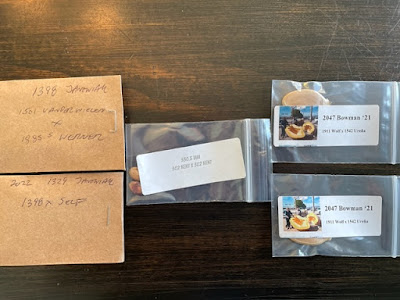
Pictured here are the seed packets for this seasons starters. At this point you hope you look back at this post in October and say, "I'm sure glad I grew that seed." I like the genetics in these seeds. I'll take my two best 1775 plants and put them in one hoop house and put the 1421 and 1789 in the other. The kids will grow the 1799.
Going into this season my mind was set on the 1421. Now I'm not so sure. Talking with Thad Starr today he said that Quinn Werner said to not grow genetics more than three years old. That actually makes good sense. The 1421 has grown a lot of big pumpkins. Probably statistically the 3rd best seed all-time for progeny. However with all of the seeds that have been planted the biggest that it has grown is in the 1600 pound range. The 1789 has pumpkins 200 lbs larger however. When you look across all the pumpkins it isn't grower techniques that is pushing the weights up every year. Every 3-4 years the genetics have gotten so much better that it is making the older seeds obsolete. The 1421 is now 4 years old.
We will see what the plants look like and then make our decision. This year I'm not going to go by plant vigor when making my decision. I'm going to look at the plant traits and see which plant that looks the most like the parent plant that I want and then go with that. Too often you hear world record holders say that the plant that grew the big one wasn't their best looking plant early on.
Pictured here are the seed packets for this seasons starters. At this point you hope you look back at this post in October and say, "I'm sure glad I grew that seed." I like the genetics in these seeds. I'll take my two best 1775 plants and put them in one hoop house and put the 1421 and 1789 in the other. The kids will grow the 1799.
Going into this season my mind was set on the 1421. Now I'm not so sure. Talking with Thad Starr today he said that Quinn Werner said to not grow genetics more than three years old. That actually makes good sense. The 1421 has grown a lot of big pumpkins. Probably statistically the 3rd best seed all-time for progeny. However with all of the seeds that have been planted the biggest that it has grown is in the 1600 pound range. The 1789 has pumpkins 200 lbs larger however. When you look across all the pumpkins it isn't grower techniques that is pushing the weights up every year. Every 3-4 years the genetics have gotten so much better that it is making the older seeds obsolete. The 1421 is now 4 years old.
We will see what the plants look like and then make our decision. This year I'm not going to go by plant vigor when making my decision. I'm going to look at the plant traits and see which plant that looks the most like the parent plant that I want and then go with that. Too often you hear world record holders say that the plant that grew the big one wasn't their best looking plant early on.
Labels:
pumpkin seeds
Saturday, April 6, 2013
Tilled the Pumpkin Patch and Added Amendments
Today I tilled the planting areas and add some gypsum (for calcium), iron and manganese to the soil. I also added some sugar to help get the soil biology going. Last fall some of the patch wasn't tilled so I spent particular time tilling the areas were the sorghum sudan grass was still standing. That will give it a month to get broken down until I put my plants in the soil.
Overall the soil looked pretty good. I saw some of the biggest worms in the patch that I have ever seen in my soil where the sudan grass was located.
Wednesday, April 3, 2013
Learn to Grow a Giant Pumpkin from World Record Holder Ron Wallace
Learn the secrets to growing a one-ton World
Record giant pumpkin from the grower himself. Special, limited time offer on Ron
Wallace's How I Grew the World Record 2009 DVD. Just $18.99!
In this special DVD Ron sits down with you and carefully recalls all the techniques and details he used to grow a 2,009 pound and 1,879 pound pumpkin in his record breaking year. This DVD is packed with photos, PowerPoint, numerous reports and narrations of EVERYTHING he did to grow the first one-ton pumpkin.
Order online at to take advantage of this special offer at:
http://seeds.denverpumpkins.com/gaint-pumpkin-seed-shop/how-i-grew-the-world-record-2009-dvd/
In this special DVD Ron sits down with you and carefully recalls all the techniques and details he used to grow a 2,009 pound and 1,879 pound pumpkin in his record breaking year. This DVD is packed with photos, PowerPoint, numerous reports and narrations of EVERYTHING he did to grow the first one-ton pumpkin.
Order online at to take advantage of this special offer at:
http://seeds.denverpumpkins.com/gaint-pumpkin-seed-shop/how-i-grew-the-world-record-2009-dvd/
Monday, April 1, 2013
Check Out the Denver Post on Page 3C
My wife is a wonderful writer and writes a monthly column for the Denver Post on how to spend your money smartly. Her personal narratives always make me laugh until I find that I'm the focus of the article. However, this time she kind of got the article right. At least the topic was right. You can never go wrong talking about giant pumpkins. You can find her article online at: http://www.denverpost.com/smart/ci_22902867/life-lessons-from-growing-great-pumpkin.
(Note to readers: my wife was never one to let the truth get in the way of a good story. Lol)
Saturday, March 16, 2013
7 Secret Giant Pumpkin Growing Tips for New Growers
The following are 7 giant pumpkin growing tips for gardeners and families wanting to grow a giant pumpkin:
1. What do you feed a giant pumpkin?
A well composted soil that is balanced is key to growing a giant pumpkin. Most of what will determine if you are going to grow a giant pumpkin happens before you even put the plant in the ground. A great soil comes through some hard work and soil tests to make sure the levels of nitrogen, potassium, potash and calcium are in the right ratios.
2. Do you need special seeds to grow a giant pumpkin?
Yes! Atlantic Giant seeds are the only variety of pumpkin seed that will get over 500 pounds and the Atlantic Giant seeds you get in the hardware store probably aren't going to do it for you. You need seeds that have had controlled crosses of the best seed stock to get the real giants. With these types of seeds to grow a pumpkin over 100 pounds is not very difficult. Get seeds from the Pumpkin Man at http://seeds.denverpumpkins.com.
3. When should you plant your pumpkin seeds?
I start my plants indoors under grow lights and in a heated closet around April 15th. By May 1st I put my plants in the ground inside of a hoop house (a small greenhouse). For most growers who aren't looking to grow competition pumpkins I would recommend starting their pumpkin seeds around May 3rd in a big pot and put their plants outdoors around the 20th.
4. How much do you water the pumpkin plant?
I water everyday and keep the ground lightly moist but not overly damp. Giant pumpkins are 80% water so you need a lot of water to grow a big one.
5. When do you pollinate the pumpkin?
I usually pollinate around July 1st. That will give the pumpkin a little more than 90 days to grow before the weigh-offs that start around the end of September and go to mid-October. In just 90 days a well taken care of pumpkin will put on as much as 40 pounds a day at its peak growth and will end up over 1,000 pounds. By July 1st your plant should have grown big enough to power the growth of your pumpkin. You want to grow just one pumpkin on the plant and it should be on the main vine at least 9 feet out from the stump.
6. Do giant pumpkin growers use any special growth hormones, fertilizers or chemicals to grow a giant pumpkin?
The honest answer to that is 'kind of.' A competition giant pumpkin grower usually grows organic. Not because of a a green, love of the earth attitude (frankly most growers would poor battery acid on their plants if it would make a pumpkin grow bigger) but because it tends to grow the biggest pumpkins. Growers will use a combination of things like Myko, Azos, liquid seaweed (growth hormone regulator), compost tea, etc. that may seem a little exotic to some but is pretty well known in the giant growing community. A lot of these things can be found in the Giant Pumpkin Growers Kit. I am spent time with growers that have grown world record pumpkins. They don't really have any secret formulas other than hard work and a fair amount of research to have had the success that they have had.
7. I've heard you should bury your vines to grow a giant pumpkin. Why is that?
At each leaf node a vine will put out a root from the top and bottom of the vine if the vine is buried. You can probably double the amount of roots your plants have by burying the vines. Those roots will be an important part of growing a big pumpkin.
To learn more about growing giant pumpkins or to get involved in competition giant pumpkin growing visit the Rocky Mountain Giant Vegetable growers at www.coloradopumpkins.com.
1. What do you feed a giant pumpkin?
A well composted soil that is balanced is key to growing a giant pumpkin. Most of what will determine if you are going to grow a giant pumpkin happens before you even put the plant in the ground. A great soil comes through some hard work and soil tests to make sure the levels of nitrogen, potassium, potash and calcium are in the right ratios.
2. Do you need special seeds to grow a giant pumpkin?
Yes! Atlantic Giant seeds are the only variety of pumpkin seed that will get over 500 pounds and the Atlantic Giant seeds you get in the hardware store probably aren't going to do it for you. You need seeds that have had controlled crosses of the best seed stock to get the real giants. With these types of seeds to grow a pumpkin over 100 pounds is not very difficult. Get seeds from the Pumpkin Man at http://seeds.denverpumpkins.com.
3. When should you plant your pumpkin seeds?
I start my plants indoors under grow lights and in a heated closet around April 15th. By May 1st I put my plants in the ground inside of a hoop house (a small greenhouse). For most growers who aren't looking to grow competition pumpkins I would recommend starting their pumpkin seeds around May 3rd in a big pot and put their plants outdoors around the 20th.
4. How much do you water the pumpkin plant?
I water everyday and keep the ground lightly moist but not overly damp. Giant pumpkins are 80% water so you need a lot of water to grow a big one.
5. When do you pollinate the pumpkin?
I usually pollinate around July 1st. That will give the pumpkin a little more than 90 days to grow before the weigh-offs that start around the end of September and go to mid-October. In just 90 days a well taken care of pumpkin will put on as much as 40 pounds a day at its peak growth and will end up over 1,000 pounds. By July 1st your plant should have grown big enough to power the growth of your pumpkin. You want to grow just one pumpkin on the plant and it should be on the main vine at least 9 feet out from the stump.
6. Do giant pumpkin growers use any special growth hormones, fertilizers or chemicals to grow a giant pumpkin?
The honest answer to that is 'kind of.' A competition giant pumpkin grower usually grows organic. Not because of a a green, love of the earth attitude (frankly most growers would poor battery acid on their plants if it would make a pumpkin grow bigger) but because it tends to grow the biggest pumpkins. Growers will use a combination of things like Myko, Azos, liquid seaweed (growth hormone regulator), compost tea, etc. that may seem a little exotic to some but is pretty well known in the giant growing community. A lot of these things can be found in the Giant Pumpkin Growers Kit. I am spent time with growers that have grown world record pumpkins. They don't really have any secret formulas other than hard work and a fair amount of research to have had the success that they have had.
7. I've heard you should bury your vines to grow a giant pumpkin. Why is that?
At each leaf node a vine will put out a root from the top and bottom of the vine if the vine is buried. You can probably double the amount of roots your plants have by burying the vines. Those roots will be an important part of growing a big pumpkin.
To learn more about growing giant pumpkins or to get involved in competition giant pumpkin growing visit the Rocky Mountain Giant Vegetable growers at www.coloradopumpkins.com.
Labels:
big pumpkin,
pumpkin growing tips,
vine maintenance
Subscribe to:
Posts (Atom)